*Inventory fluctuates daily. Call to verify exact board foot quantities.
Because every board is unique, we do not sell directly online. Contact us to get pricing or have us pull the perfect stack for you.
Janka Rating: 540 lbf — This low to medium hardness rating makes Poplar relatively soft, which contributes to its ease of machining but also means it is prone to dents and scratches. It is well-suited for applications requiring moderate durability, such as cabinetry and furniture, but not for high-impact surfaces.
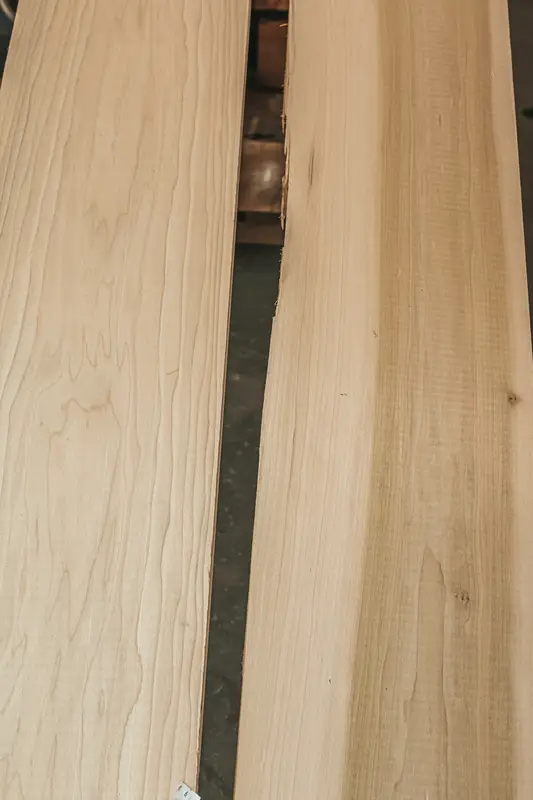
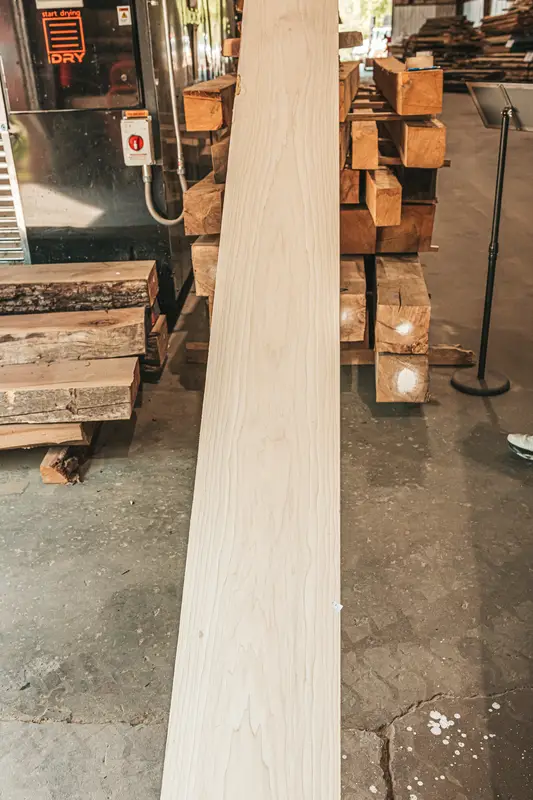
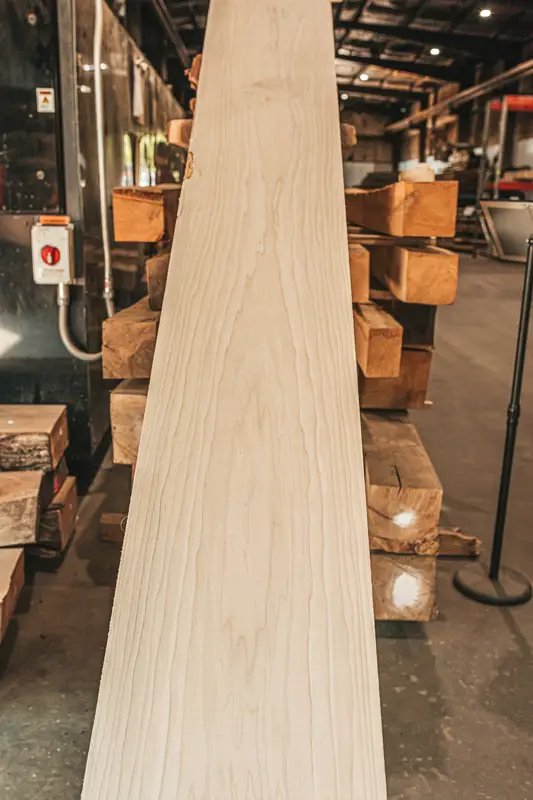
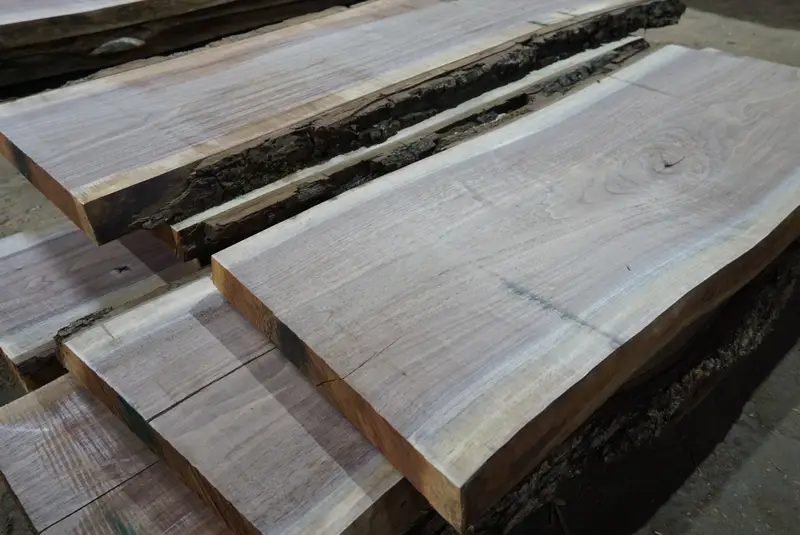
Poplar features a pale yellow to light greenish-brown heartwood that contrasts sharply with the creamy white sapwood. The grain is typically straight with a fine, uniform texture, though occasional dark streaks (often caused by stress or insect damage) and subtle figuring add visual interest. The natural color variation makes it an excellent candidate for painting, as it provides a smooth, even base for finishes without extensive preparation.
Poplar machines exceptionally well, showing minimal tear-out and causing little dulling of tools. It glues, nails, and screws easily with minimal pre-drilling. However, its softness makes it susceptible to denting during handling. When staining, avoid dark colors as they may highlight surface imperfections; a pre-stain conditioner is recommended for more even absorption. For finishing, light sanding with 220-grit paper followed by a clear finish or paint yields optimal results.

Poplar is commonly used in furniture making, cabinetry, and millwork. Its affordability and paintability make it ideal for kitchen cabinets, interior trim, and the structural components of furniture. It is also widely utilized in the production of plywood cores and for model building due to its lightweight and easy-to-shape properties.