*Inventory fluctuates daily. Call to verify exact board foot quantities.
Because every board is unique, we do not sell directly online. Contact us to get pricing or have us pull the perfect stack for you.
Poplar has a Janka hardness rating of 540 lbf, indicating it is a relatively soft hardwood. This low hardness means it is susceptible to dents and scratches, making it less ideal for high-traffic flooring or heavy-use surfaces. However, it is durable enough for furniture, cabinetry, and interior applications where impact resistance is not critical, and its softness also makes it easy to machine and work with hand tools.
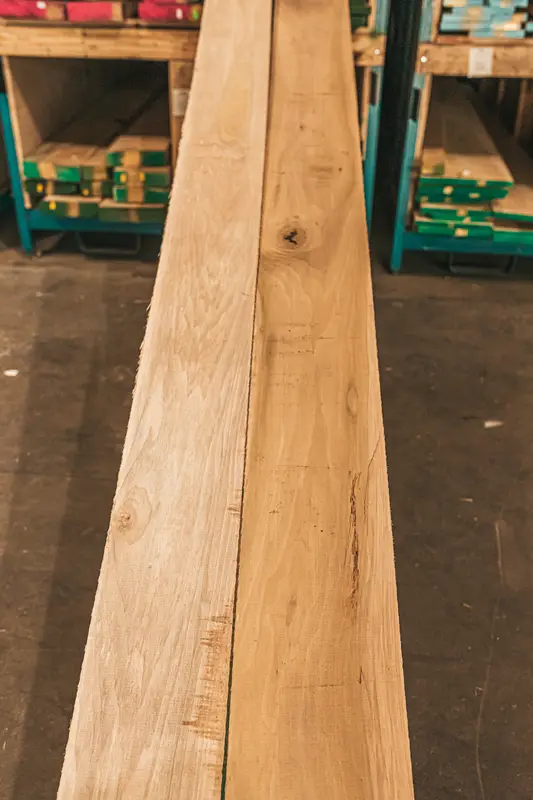
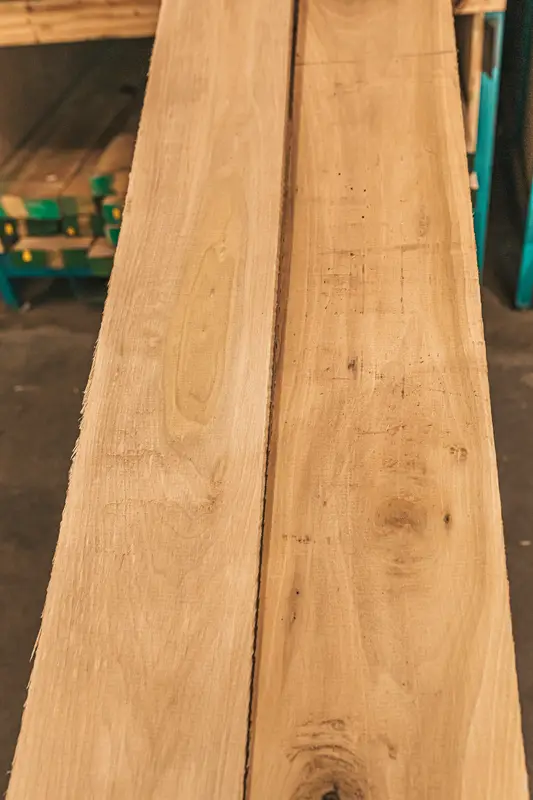
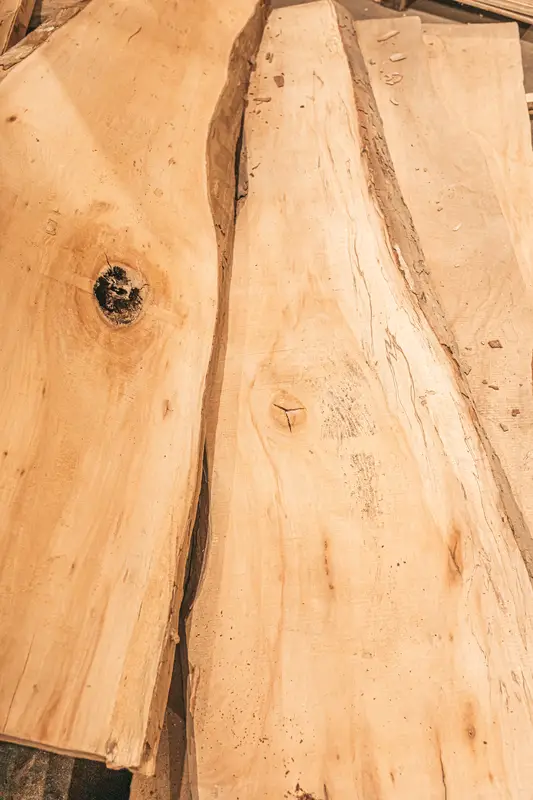
Poplar features a light tan to greenish-gray sapwood with heartwood that can range from pale brown to reddish-brown. The grain is typically straight and uniform, though it may exhibit occasional interlocking or irregularities. The texture is medium to coarse, and the wood often displays subtle figure patterns. Its natural color variations can add character to projects, and it is known for its light and clean appearance, which is particularly appealing for painted finishes. However, the wood can sometimes show dark streaks or discolorations from mineral deposits, which may require additional preparation for a uniform look.
Poplar is generally easy to work with both hand and power tools. It machines well with minimal blunting of tools, though care should be taken during resawing to avoid tear-out due to its softness and interlocking grain. It glues well with standard wood adhesives and accepts finishes smoothly. When staining, poplar may absorb unevenly, so a pre-stain conditioner is recommended for a more uniform color. It also sands easily to a smooth surface, but because of its softness, it can be prone to minor dents during handling. Overall, poplar is a forgiving wood that is well-suited for a wide range of woodworking projects, especially those requiring painting or light finishing.
Common uses for Poplar Standard lumber include furniture construction, cabinetry, millwork, and interior trim. It is frequently used for painted furniture, kitchen cabinets, and drawer boxes due to its affordability and ease of finishing. Poplar is also a popular choice for moldings, door and window frames, and other decorative elements where a smooth, paintable surface is required. In addition, it is used in some flooring applications for low-traffic areas, as well as in the manufacture of plywood cores and other structural products.